
Recycle bin compositions (2024 - … )
I started from the Windows 95 Recycle Bin icon, one of the most recognizable symbols from the early era of personal computing. I imported the icon into a 40 × 30 pixel canvas, reducing it to a limited grid of coloured squares. From this reduced version, I selected different sections and zooms to create new pixel compositions. I then enlarged these images without interpolation, allowing each individual pixel to become a visible square while preserving the original structure. The resulting works are built entirely from the colour information contained within a single digital icon, transforming one familiar interface element into a series of new images.
A reference point for this project is Thomas Ruff’s jpeg(2004–2007), in which the artist enlarges low-resolution digital images until the compression artefacts and structures of the files become visible. I was inspired by the way Ruff treats the digital image not only as a carrier of information, but also as an object with its own material qualities. My approach starts from an opposite gesture: instead of enlarging an entire reduced image and exposing its limitations, I consider the icon as a larger visual field and extract small, precise fragments from within it. By enlarging these details without interpolation, I transform the individual pixels into the foundation of new graphical compositions.
During the process, I began experimenting with different methods of scaling the images up and down. By changing the interpolation settings, I discovered that the scaling process could introduce unexpected textures, gradients, and visual artefacts. These transformations sometimes created qualities that were not present in the original pixel structure, adding another layer between the source image and the final composition. Rather than treating these results as errors, I started to see them as a continuation of the image-making process, allowing the behaviour of the software itself to influence the final work.
I also experimented with different canvas sizes and discovered that the grid itself became an important compositional element. A 5 × 5 pixel canvas reduced the icon to a small arrangement of coloured squares, producing almost purely geometric compositions in which the individual pixels became the dominant visual element. Larger and wider canvases allowed more information from the original image to remain visible, thus creating more complex compositions.


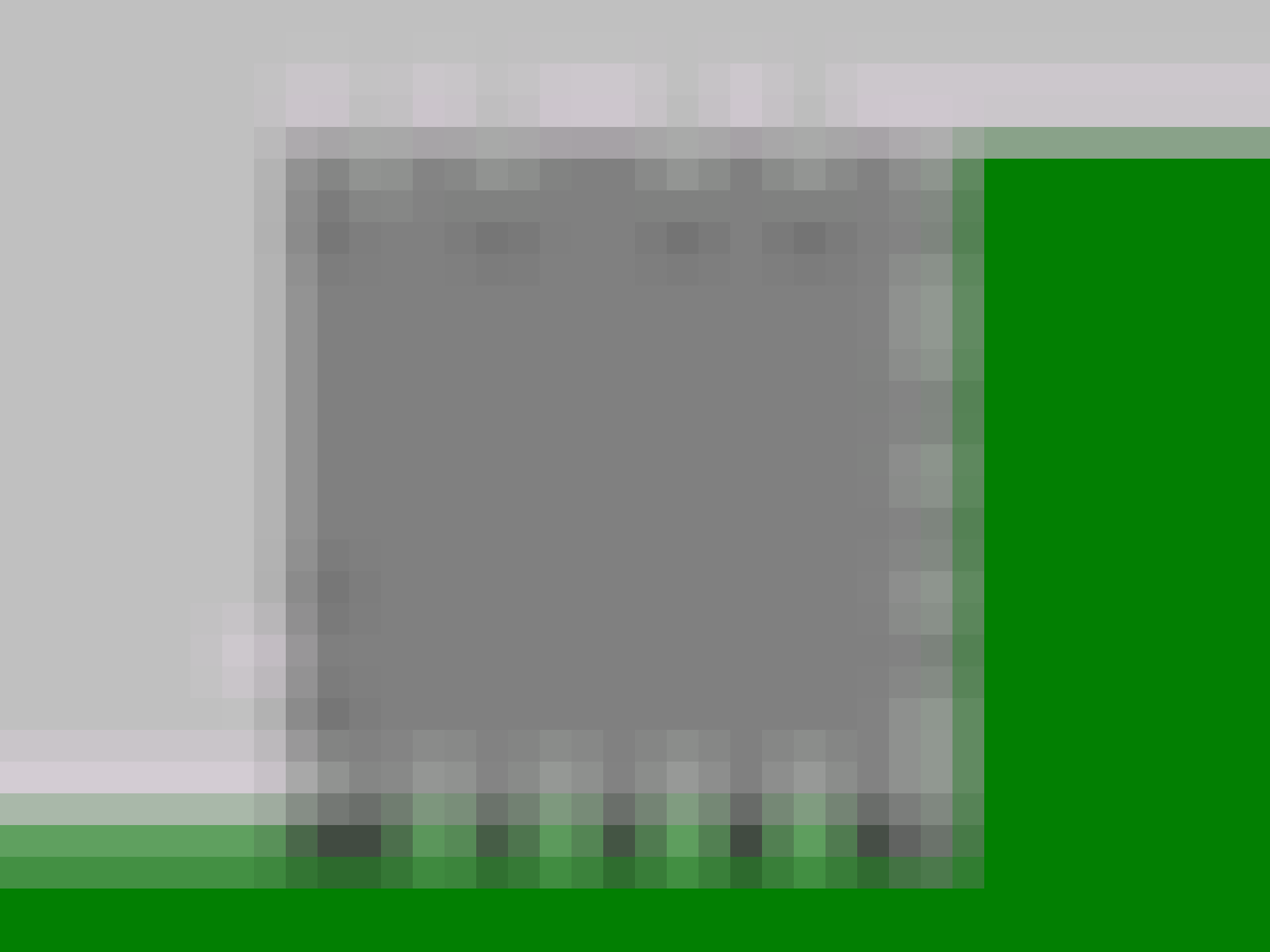

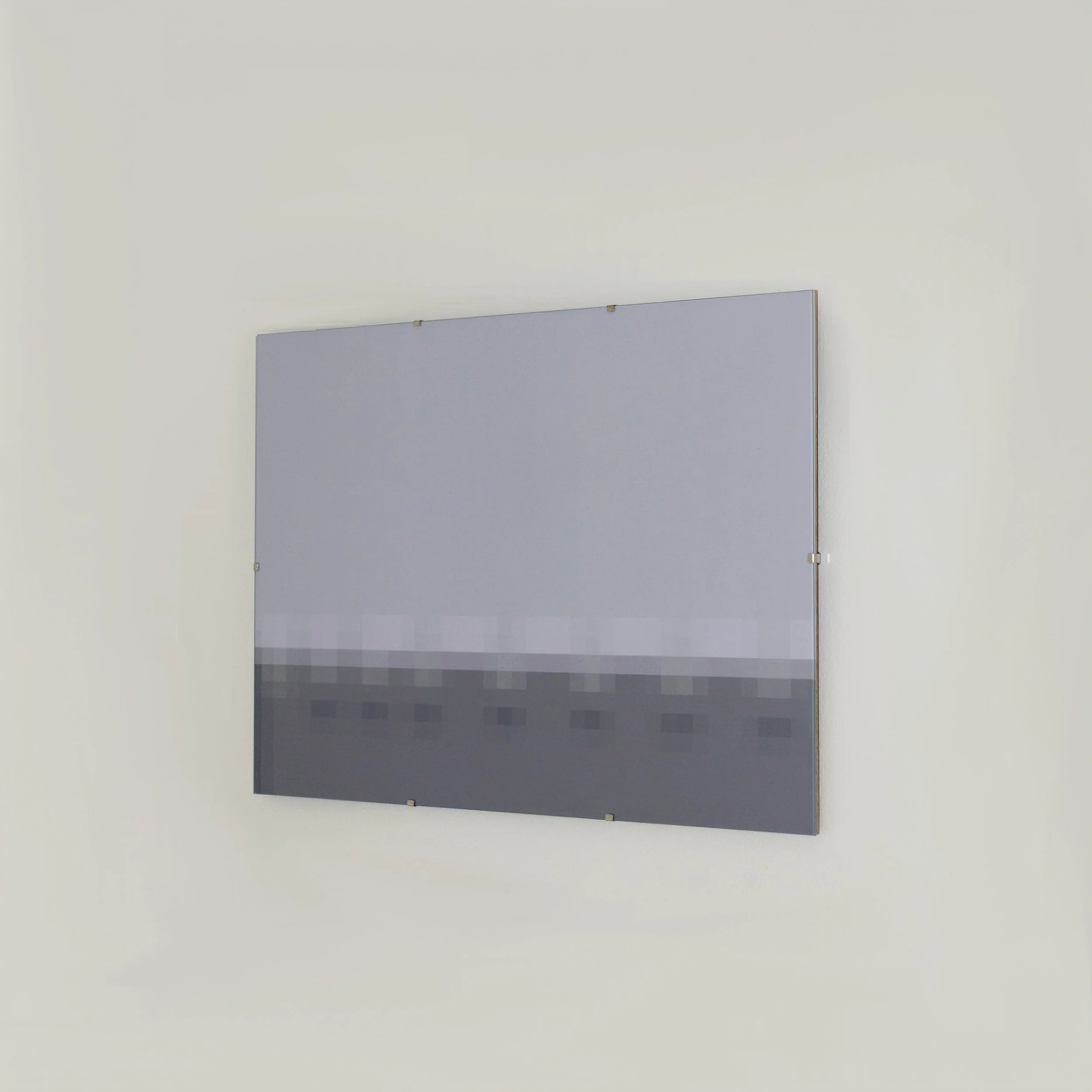
Mounted in an A3 clip frame with glass panel.









Two digital collages made exclusively with graphics generated/harvested from the recycle bin icon.